Metal-Insulator Quantum Phase Transitions

Metal or insulator - and why? To answer this simple
question has been the goal and the driving force for much of
the physical science as we know it today. Going back to
Newton’s not-so-successful exercises in Alchemy, the scientist
had tried to understand what controls the flow of electricity
in metals and what prevents it in insulators. To understand it
and to control it - achieving this could prove more useful and
lucrative than converting lead into gold.
In almost every instance, these advances are based on
materials that find themselves somewhere between
metals and insulators.
Material properties are easy to tune in this regime, where
several possible ground states compete. Here most physical
quantities display unusual behavior, and prove difficult to
interpret using conventional ideas and approaches. In this
regime, the electrons simply do not seem to be able to decide:
move fast and conduct electricity or get stuck by impurities
or inter-particle repulsion - leading to insulating behavior.
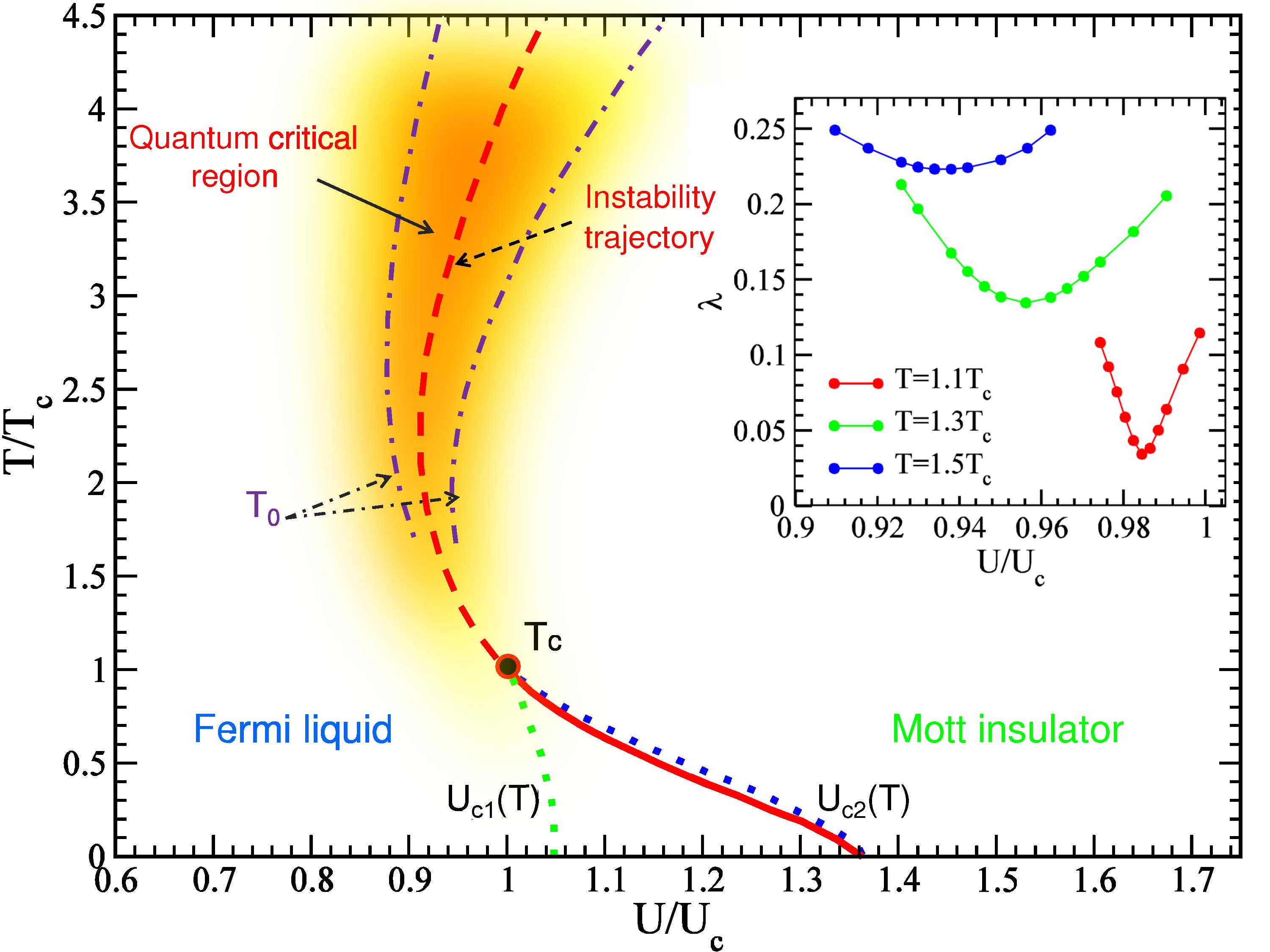
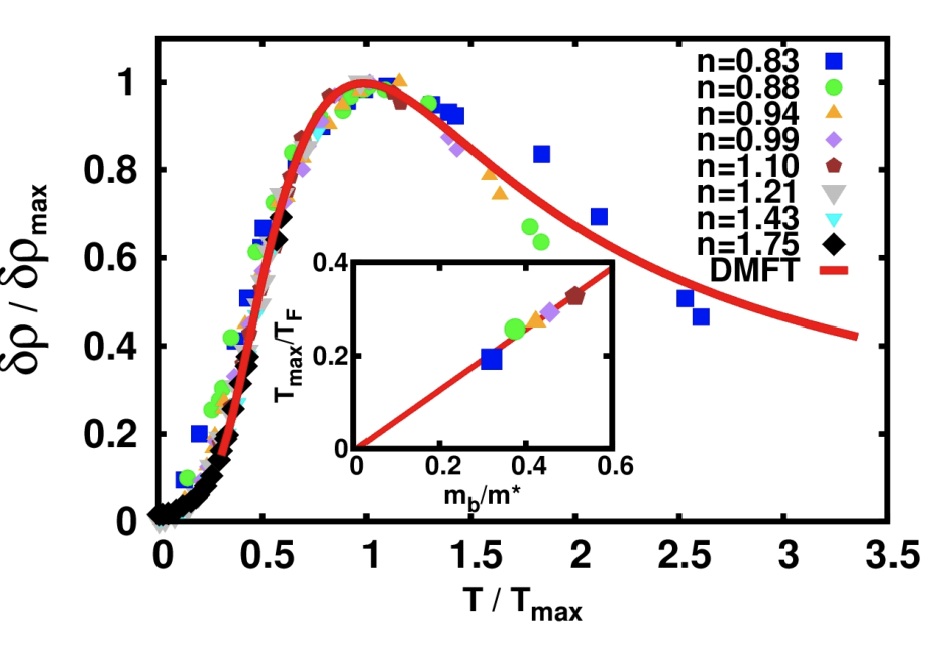
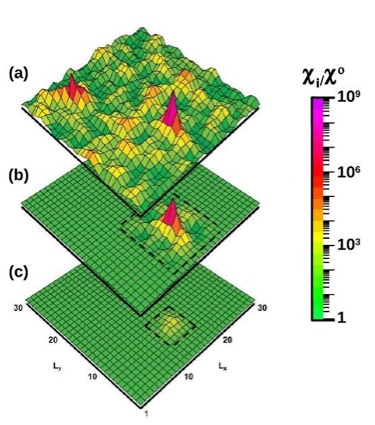
Strange properties of the "no-man's land" between metals and insulators can be understood as the Quantum Critical Regime of the metal-insulator transition. To come to grips with this unfamiliar regime, one has to develop conceptual understanding of the interplay of quantum fluctuations and strong electronic correlations on one hand, and the tendency to form strongly inhomogeneous states of matter and slow glassy dynamics on the other. This very difficult but fundamentally important task is the central goal of our theoretical work.
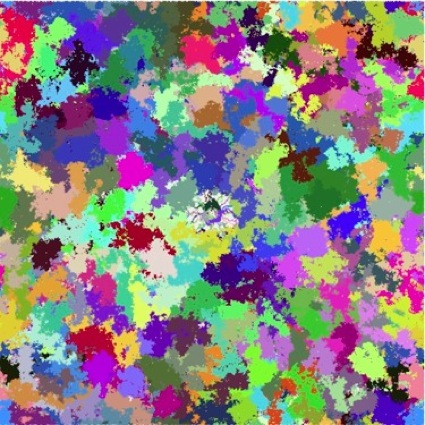
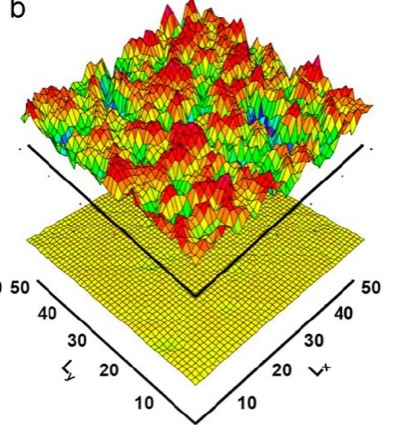
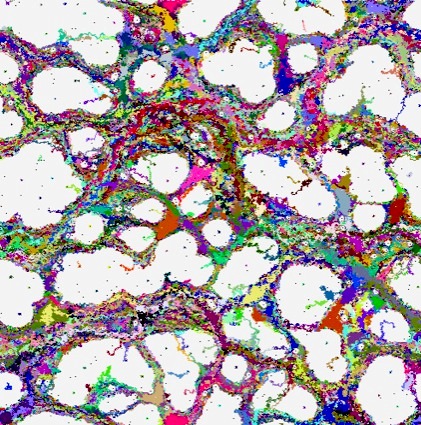
The fractal background
pattern behind this Web page shows the distribution
of currents in a Coulomb Glass - a Coulomb system
in presence of moderate to strong disorder. Using JAVA
simulations, we apply an external electric field and watch the
electrons move. Here each electron is assigned a different
color, and a "tracer" protocol is implemented, creating a
colorful trace for each electron. In presence of disorder we
observe very large "white" regions - domains where almost no
current flows. Remarkably, the flow then assumes "filamentary"
form, where the current paths form "rivers".
The fractal shapes of these current flows reflect the critical
("marginally stable") nature of the Coulomb Glass.
 This
is a green
website. We are committed to conserve energy -
we only use Baym-Kadanoff conserving approximations
This research is supported
by
NSF grant DMR-1005751